
How to Clean a Shingle Roof (Without Damaging It)
The short answer: never use a pressure washer. The safe way to clean a shingle roof is called soft washing — a low-pressure spray combined with a diluted cleaning solution that kills algae and moss on contact without stripping the protective granules off your shingles. Get this step wrong and you can turn a $200 cleaning job into an $8,000 to $15,000 roof replacement. Here is exactly how professional roofers clean a shingle roof safely, what causes those black streaks in the first place, and when the job is too risky to do yourself.
Posted by TheQuickGuys | Roofing Services
Quick Guys Editorial Team July 26, 2026— NYC
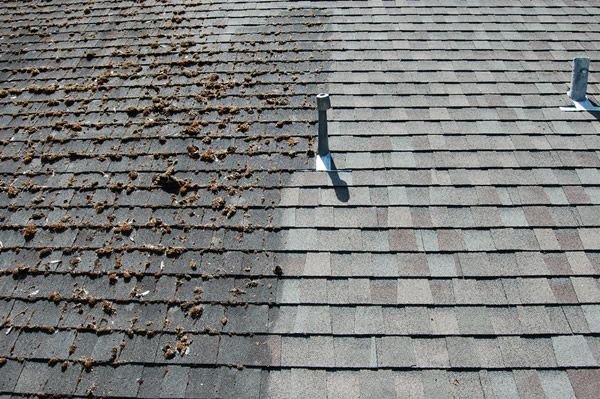
Why Your Shingle Roof Has Black Streaks in the First Place
Those dark streaks running down a shingle roof are not dirt, soot, or mold — they are algae, specifically a strain called Gloeocapsa magma. This algae feeds on the limestone filler used in asphalt shingle manufacturing, and as colonies spread across the roof they develop a dark, protective outer coating that shows up as black or greenish-black streaking. Rain alone will not wash it away because the algae is alive and actively growing, not sitting on the surface.
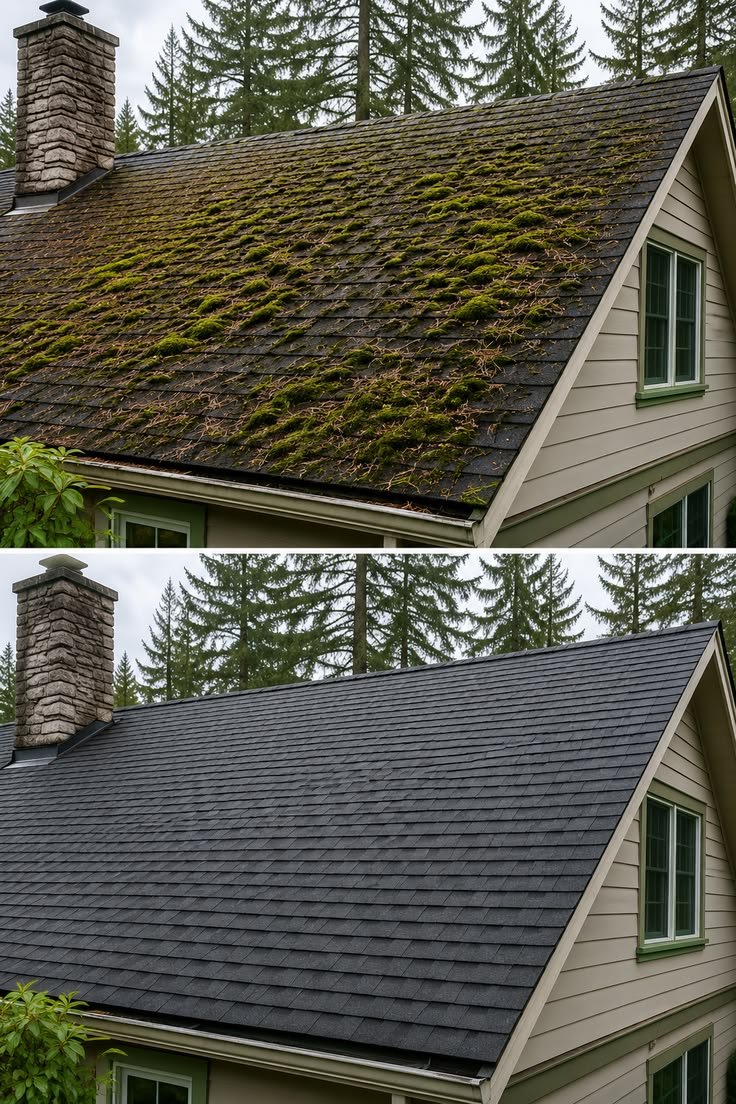
Algae streaking typically appears on the north-facing slope of a roof first, since that side stays shaded and retains moisture longer after rain. In the Bronx and Westchester, homes surrounded by mature tree cover see algae and moss develop noticeably faster — often within 3 to 5 years of a new roof install — because shade keeps the shingles damp for longer stretches between dry periods. Moss is a separate but related problem: unlike algae, moss holds water directly against the shingle surface and can lift shingle edges over time, creating a path for water infiltration that algae alone does not cause. Effective roof algae removal depends on dwell time, not scrubbing pressure — this is the principle that separates a soft wash from every damaging method homeowners are tempted to try instead.
Roof Algae Removal — What Actually Kills It
Roof algae removal only works when the treatment addresses the organism at the root, not just the visible surface stain. Gloeocapsa magma grows as a living colony beneath the surface layer of the shingle, which is why a light surface rinse or a quick scrub never provides lasting results — the algae simply regrows within weeks. Effective roof algae removal requires a cleaning solution with enough dwell time to penetrate the colony completely, followed by a thorough rinse that carries the dead organic matter off the roof rather than leaving it to decompose in the gutters below.
The Safe Way — Soft Wash Roof Cleaning Method
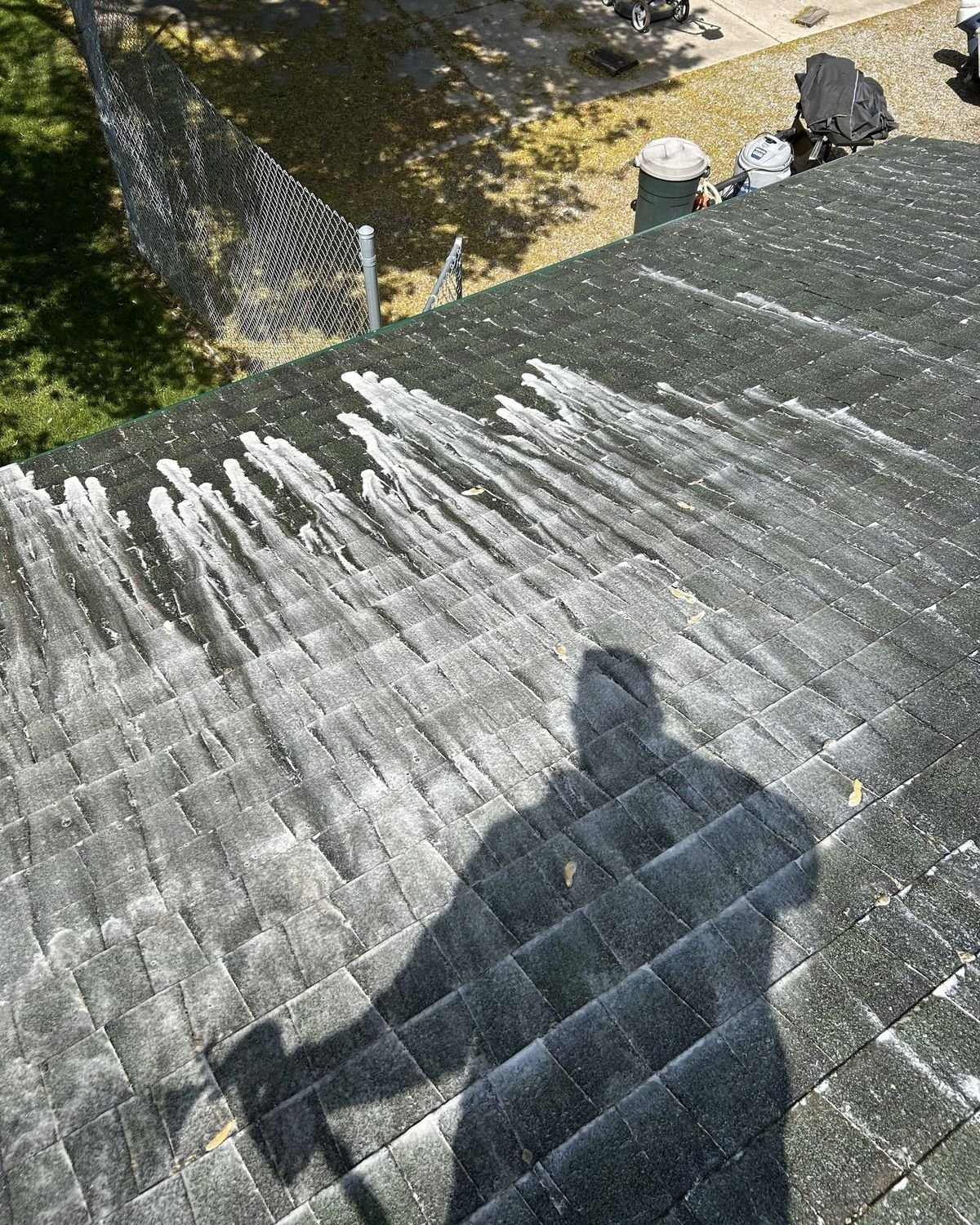
Soft washing is the industry-standard method for cleaning asphalt shingle roofs, and it is what licensed roofing contractors use almost universally. The process uses low water pressure — typically under 100 PSI, compared to 2,000 to 4,000 PSI from a standard pressure washer — combined with a cleaning solution that does the actual work of killing algae, moss, and mildew. The low pressure means the solution has time to sit on the shingle surface and penetrate the algae colony rather than blasting it (and the shingle granules) off entirely. Soft wash roof cleaning is the industry-standard method precisely because it separates the cleaning power from the water pressure — the chemistry does the work, not the force.
Step 1 — Clear loose debris. Sweep or gently rake off leaves, sticks, and any nests before applying any solution. Wet debris left on the roof traps moisture underneath the cleaning solution and reduces its effectiveness.
Step 2 — Protect landscaping. Before spraying anything, soak the plants, shrubs, and grass along the drip line with plain water and cover anything delicate with plastic sheeting. Bleach-based cleaners will kill vegetation on contact if runoff is not diluted or blocked.
Step 3 — Mix the solution. The standard professional ratio is one part household bleach (sodium hypochlorite) to three or four parts water. Some professionals add a tablespoon of dish soap per gallon, which helps the solution cling to the sloped shingle surface instead of running off before it can work. The Asphalt Roofing Manufacturers Association recommends a 50/50 solution for heavier moss and algae buildup.
Step 4 — Apply from the top down. Using a pump sprayer, apply the solution starting at the ridge and working down toward the eaves. This prevents the cleaner from running under shingles that are higher up the slope, which can force moisture beneath the shingle layer rather than off the roof surface.
Step 5 — Let it sit. Allow the solution to dwell on the shingles for 15 to 20 minutes. This dwell time is what actually kills the algae and moss — rinsing too early undoes most of the benefit of the treatment.
Step 6 — When learning how to clean a shingle roof, the rinsing stage is crucial — always use a garden hose rather than a damaging pressure washer.
Why Pressure Washing Shingles Damages Your Roof
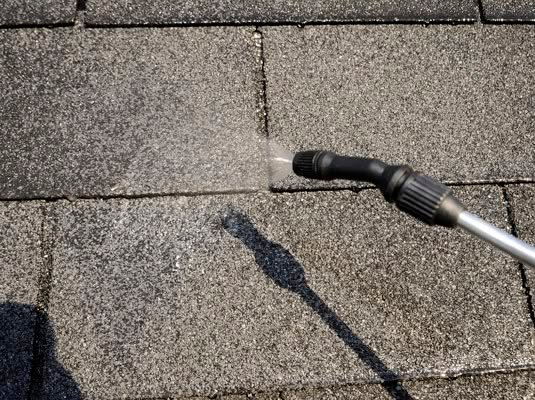
Pressure washing shingles is the single most common mistake homeowners make when tackling roof algae themselves. Asphalt shingles are coated with a layer of mineral granules that block UV radiation and give the shingle its fire resistance and weatherproofing. A standard pressure washer — even on a “low” setting — generates enough force to strip these granules off the shingle surface. Once the granules are gone, the underlying asphalt layer is exposed directly to UV rays, and the shingle begins to dry out, crack, and fail years ahead of schedule.
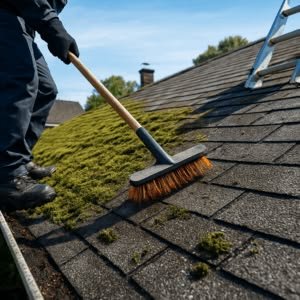
The damage from pressure washing is not always visible immediately. A homeowner may see a roof that looks freshly cleaned and assume the job went well, only to discover leaks and accelerated shingle failure within a year or two — long after the connection to the pressure washing job has been forgotten. Most shingle manufacturers explicitly void their warranty if pressure washing is used, since it is considered improper maintenance rather than normal wear. This is also why we do not recommend scrubbing a shingle roof with a stiff brush — any abrasive method that dislodges granules shortens the life of the roof regardless of how satisfying the immediate result looks.
DIY vs. Professional: How to Clean a Shingle Roof Safely
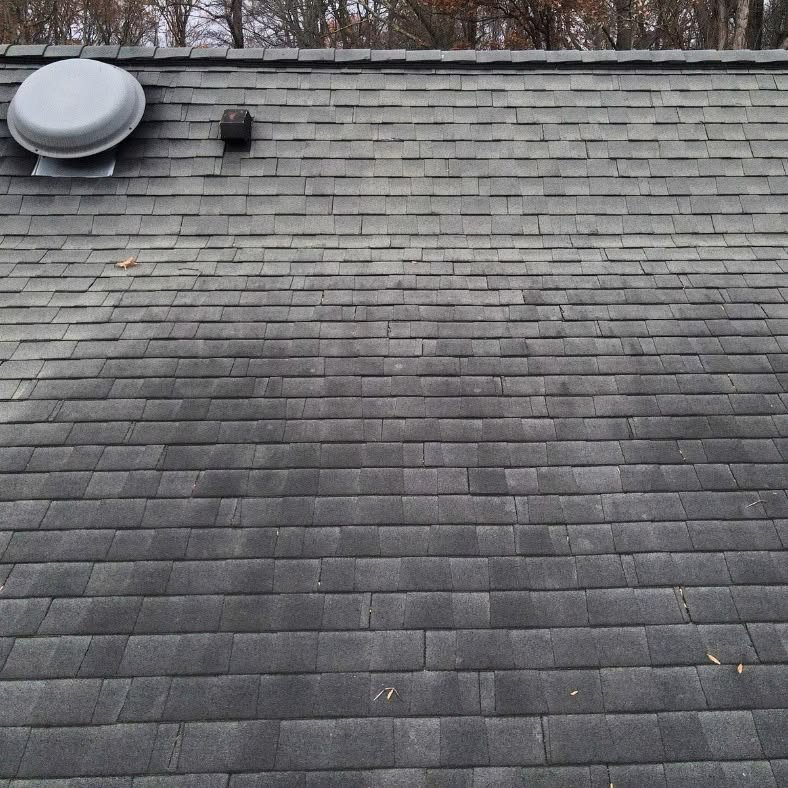
A single-story roof with a shallow pitch, good ladder access, and moderate algae staining is a reasonable DIY project for a homeowner comfortable working at height. The tools required are inexpensive: a pump sprayer, a sturdy extension ladder, non-slip shoes, and basic safety gear.
Call a professional roofer instead when any of the following apply: the roof has a steep pitch (anything over a 6:12 slope becomes genuinely dangerous to walk), the home is more than one story, moss coverage is extensive rather than surface algae, or the roof has any existing damage that a DIY cleaning could worsen. Falls from roofs are among the most common causes of serious home-maintenance injuries, and a roof that looks stained but structurally sound from the ground can have soft spots or weakened decking that only becomes apparent once weight is put on it.
Professional roof cleaning in the Bronx and Westchester typically costs $300 to $600 for a standard single-family home, depending on roof size and the extent of algae or moss coverage. This is significantly less than the cost of correcting pressure-washer damage, which often requires partial shingle replacement.
How Often Should You Clean a Shingle Roof?
Most shingle roofs benefit from cleaning once every 2 to 3 years under normal conditions. Homes in the Bronx and Westchester with heavy tree cover, north-facing slopes, or existing algae staining should plan for annual cleaning, since shaded areas regrow algae and moss noticeably faster than exposed roof sections. Regular cleaning on this schedule can extend the functional lifespan of a shingle roof by 5 to 10 years by preventing the moisture retention that accelerates granule loss and shingle deterioration.
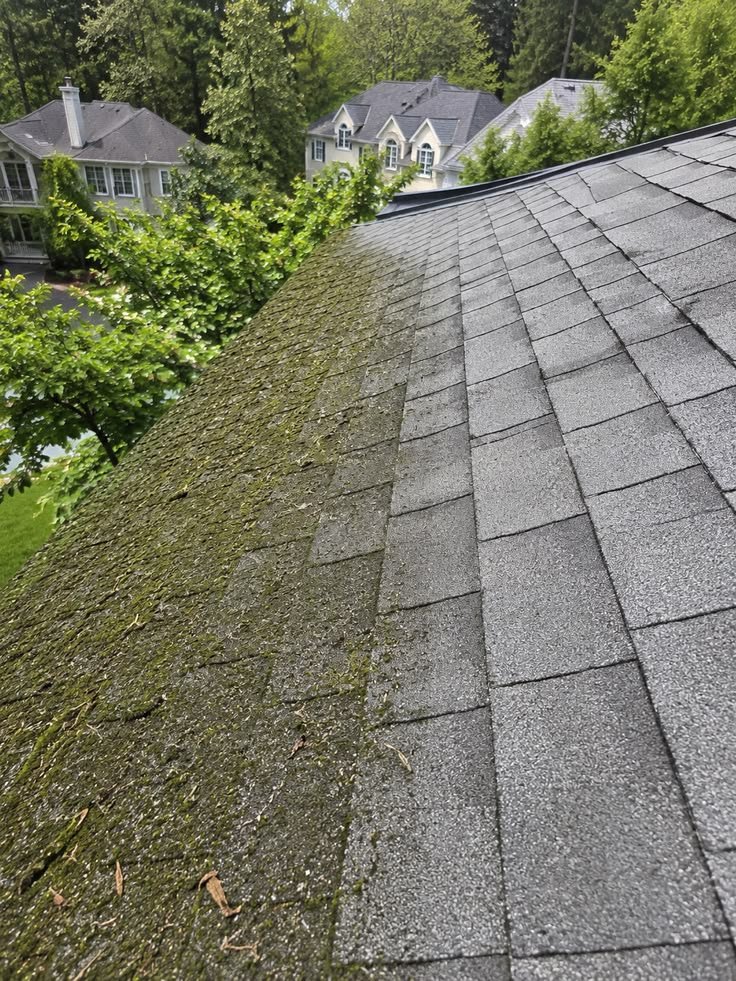
A slow-release algaecide treatment, applied after a thorough soft wash, can suppress new algae growth for up to two years and reduce how often a full cleaning is needed. Many roofing manufacturers also offer algae-resistant shingles with copper or zinc granules embedded in the surface specifically to prevent this kind of regrowth — worth considering at your next roof replacement if algae staining has been a recurring problem.
Cleaning Methods by Shingle and Roofing Material
Asphalt shingles — the most common roofing material in the Bronx and Westchester — respond well to the bleach-based soft wash method described above, using a 1:3 to 1:1 bleach-to-water ratio depending on staining severity.
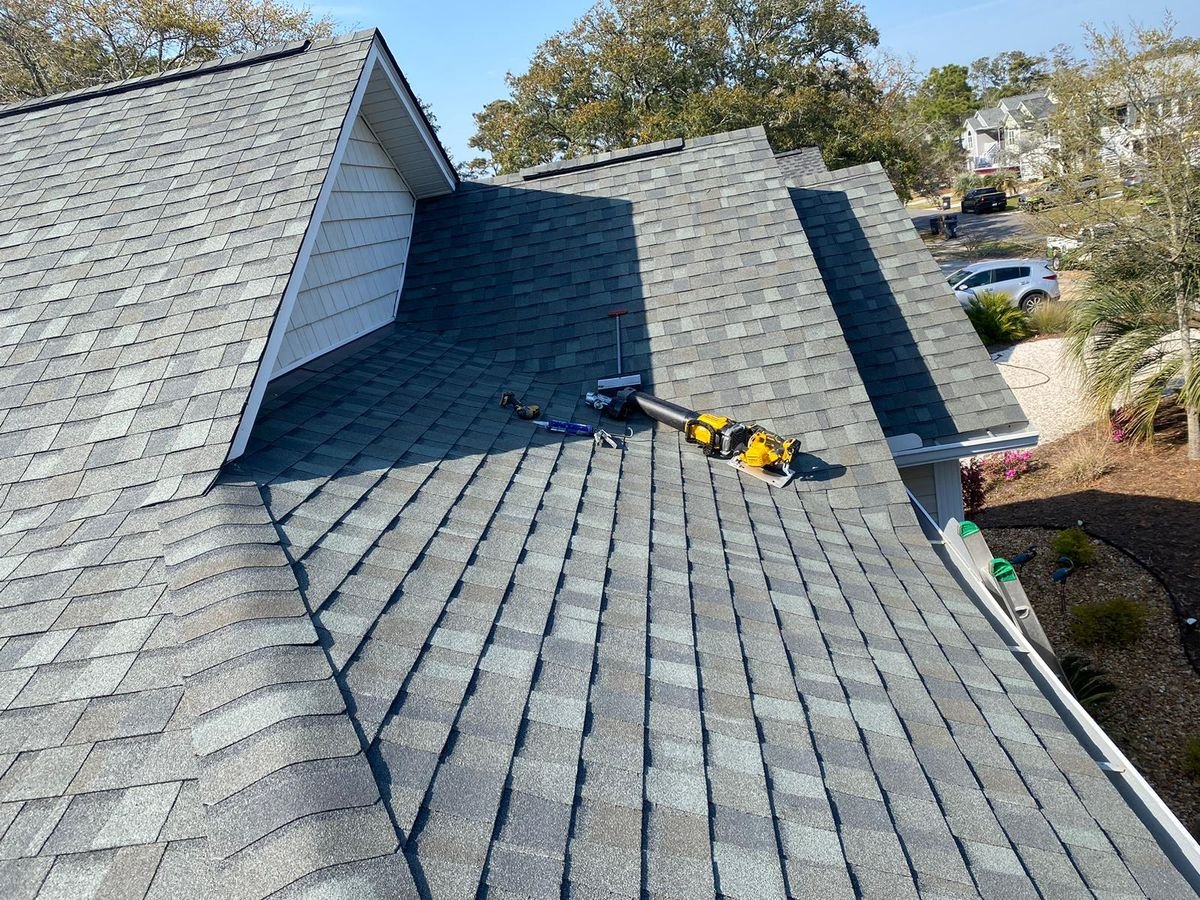
Slate roofs require a much gentler approach. Use water and a mild detergent only — bleach and harsh chemicals can damage the natural stone surface, and slate is more brittle underfoot than asphalt, making professional cleaning the safer choice for most homeowners.
Wood shake or cedar shingles should never be cleaned with bleach, which accelerates wood deterioration. Use a specialized wood-safe cleaner and avoid any pressure application, since wood shingles are especially vulnerable to splitting under force.
Clay and concrete tile roofs can generally tolerate a slightly firmer cleaning approach than asphalt, but the tiles themselves are brittle and prone to cracking underfoot — walking on a clay tile roof without proper technique can cause more damage than the algae you are trying to remove.
Cleaning Methods by Shingle and Roofing Material
How to clean roof shingles safely comes down to three non-negotiables: low pressure under 100 PSI, a cleaning solution with real dwell time, and a top-down rinse that never forces water beneath the shingle layer. Skip any one of these three and you either fail to kill the algae at the root or you create a new problem — lifted shingles, voided warranties, or granule loss — while solving the old one.
Roof Cleaning and Inspection Services in the Bronx and Westchester
The Quick Guys provides professional roof cleaning throughout the Bronx and Westchester County using the soft wash method exclusively — we do not pressure wash shingle roofs under any circumstances, because the risk to your roof’s lifespan is not worth the marginally faster result. Every cleaning includes a visual inspection of the shingles, flashing, and gutters, since a roof cleaning appointment is also an efficient time to catch developing problems before they become expensive repairs. If you are also due for a full roof inspection, our roof inspection service in Westchester covers the full 21-point checklist beyond surface cleaning. For gutter buildup that often accompanies algae and moss growth, see our gutter repair service in the Bronx.According to the Asphalt Roofing Manufacturers Association, soft washing remains the industry-recommended method for cleaning asphalt shingles without voiding manufacturer warranties.https://www.asphaltroofing.org
We hold New York State license WC-38593-H25 and carry full general liability insurance. We serve Riverdale, Mott Haven, Pelham Bay, Fordham, Yonkers, White Plains, Scarsdale, and surrounding areas. Call (929) 257-9396 for a free estimate on roof cleaning or a full inspection.
Final Thoughts — A Clean Roof Is a Maintenance Decision, Not a Cosmetic One
Knowing how to clean roof shingles safely comes down to one principle that gets overlooked constantly: the goal is not to make the roof look new again as fast as possible, it is to remove the algae and moss without shortening the life of the shingles underneath. Every method that promises a faster result — pressure washing, aggressive scrubbing, oversized bleach concentrations — trades a few hours of convenience for years of shingle life. The soft wash method takes a little longer and requires a bit more patience during the dwell time, but it is the only approach that removes the problem without creating a new one.
The black streaks on your roof are not just a cosmetic issue your neighbors notice — they are a sign of an active biological process that, left unaddressed for years, contributes to granule loss and moisture retention that shortens the roof’s usable life. The good news is that the fix is inexpensive and, for most single-story homes with a moderate pitch, manageable as a DIY project with the right solution, the right technique, and basic safety precautions. The moment the job stops being manageable — a steep pitch, a multi-story home, extensive moss rather than surface algae, or any doubt about the condition of the roof itself — is the moment to call a professional rather than risk a fall or accelerate damage to a roof that is already due for real attention.
For a full roof assessment beyond surface cleaning, visit our roof inspection service in Westchester — a complete 21-point checklist covering shingles, flashing, ventilation, and structural condition. If algae or moss buildup has spread into your gutters, our gutter repair service in the Bronx addresses the drainage issues that often accompany roof staining. And if you have concrete steps, brick, or stone masonry that also needs attention this season, see our concrete steps repair page for pricing and process.
When figuring out how to clean a shingle roof without causing damage, soft washing is the industry standard…
Black streaks on a shingle roof are algae, specifically Gloeocapsa magma, which feeds on the limestone filler in asphalt shingles. It typically appears first on north-facing, shaded slopes where moisture lingers longer. It will not wash away with rain alone since it is a living organism actively growing on the shingle surface, not surface dirt.
Yes. Pressure washers generate enough force to strip the protective mineral granules off asphalt shingles, exposing the underlying material to UV damage and accelerating cracking and failure. Most shingle manufacturers void their warranty if pressure washing is used. Damage is often not visible immediately and may not surface as leaks or accelerated wear for a year or more.
Most shingle roofs should be cleaned every 2 to 3 years. Homes with heavy tree cover or north-facing shaded slopes — common throughout the Bronx and Westchester — should be cleaned annually, since shade accelerates algae and moss regrowth. Regular cleaning can extend a shingle roof’s functional lifespan by 5 to 10 years.
Professional roof cleaning in the Bronx and Westchester typically costs $300 to $600 for a standard single-family home, depending on roof size and the extent of algae or moss coverage. This is significantly less expensive than repairing damage caused by improper DIY pressure washing.
Call a professional when the roof has a steep pitch (over a 6:12 slope), the home is more than one story, moss coverage is extensive, or there is any existing shingle damage. Falls from roofs are a leading cause of serious home-maintenance injuries, and roofs that appear sound from the ground can have hidden soft spots or weakened decking.
Yes. Regular soft-wash cleaning every 2 to 3 years — or annually for shaded roofs — prevents the moisture retention from algae and moss that accelerates granule loss and shingle deterioration. This routine maintenance can extend a shingle roof’s functional lifespan by 5 to 10 years.