
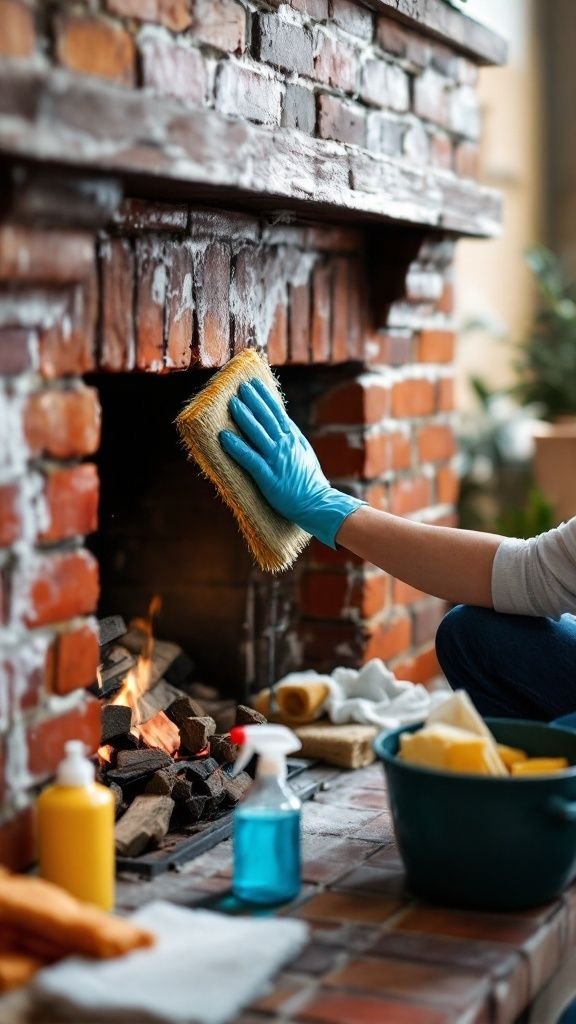
The fireplace must be completely cold before you begin — wait at least 24 hours after the last fire, since hot or even warm ash can cause burns or reignite unexpectedly. Remove the grate and any leftover wood, then sweep out remaining ashes with a dustpan and brush. Use a vacuum with a dusting brush or crevice tool attachment to clear out as much loose soot and dust as possible before introducing any liquid — bricks are porous, and wetting soot before removing the loose layer just pushes grime deeper into the surface.
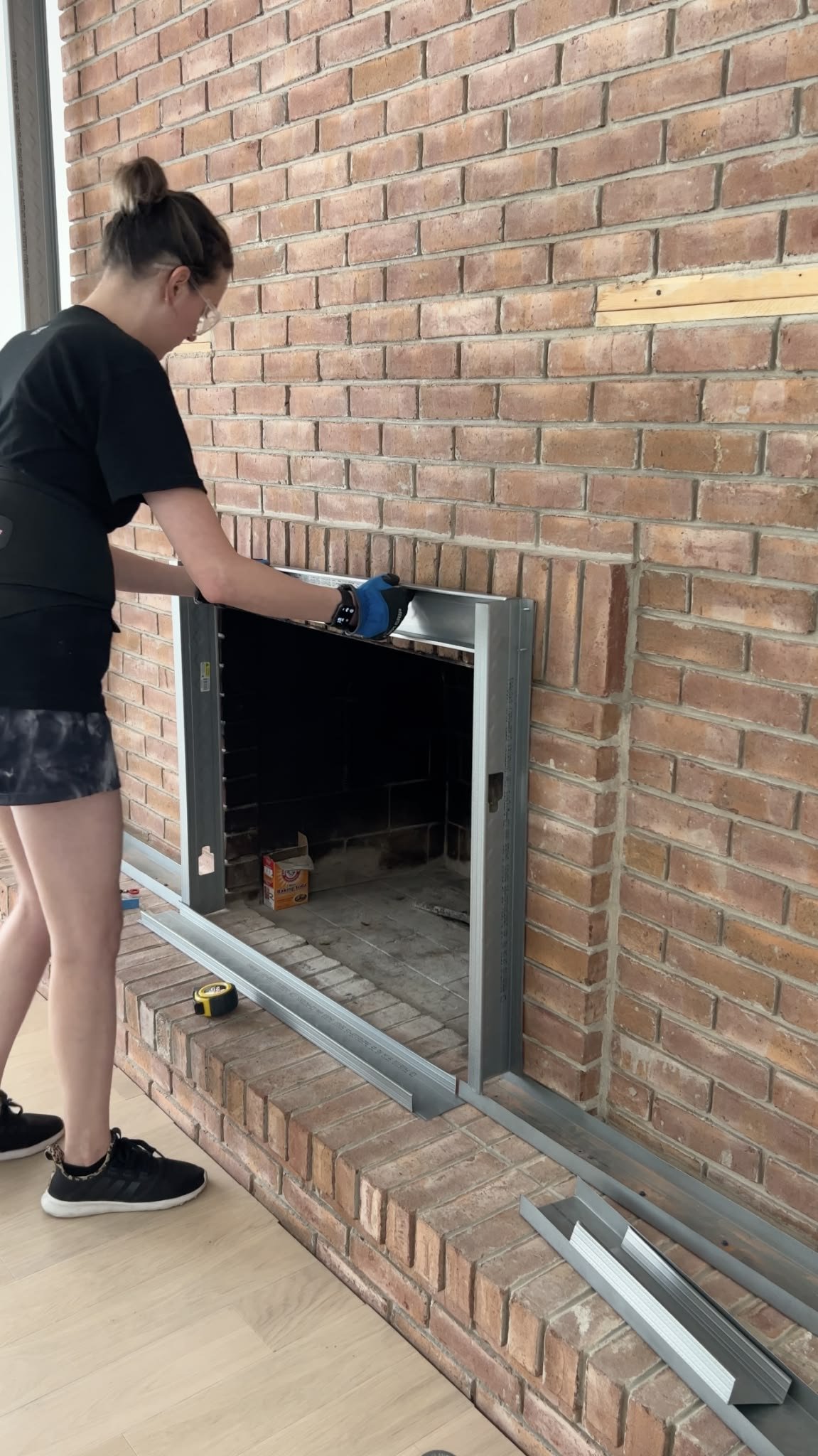
How to remove soot from brick fireplace surfaces starts with the type and severity of the staining. Light, fresh soot responds well to simple methods, while baked-on, years-old buildup needs a more aggressive approach.
For light soot: Use a dry, stiff-bristle brush to loosen surface soot first, then vacuum with a handheld attachment before introducing any liquid. A mixture of warm water and mild dish soap handles most light buildup — spray or wipe onto the brick, scrub gently, and rinse with clean water.
For moderate soot: Combine equal parts white vinegar and water in a spray bottle. Saturate the brick with the solution, let it sit briefly, then scrub with a stiff brush and rinse thoroughly with clean water. Vinegar acts as a natural degreaser that cuts through grime without harsh chemical fumes.
For a small stained area: Make a paste from two tablespoons of cream of tartar and a small amount of water. Apply directly to the black marks, let it sit for 10 to 15 minutes, scrub, and rinse. This is one of the most effective natural spot-treatment methods for isolated soot staining.
The best way to clean brick fireplace surfaces with heavier, more stubborn soot buildup often comes down to a baking soda paste. Combine half a cup of baking soda with three tablespoons of liquid dish soap in a bowl to form a thick paste. Apply the paste directly over the soot-stained area and let it sit for about 10 minutes, giving the mixture time to break down the grime. Scrub thoroughly with a stiff brush, then rinse with clean water using a spray bottle set to stream — this flushes the paste out of the brick’s small pores far more effectively than a damp cloth alone. Let the surface air dry completely, ideally overnight, before using the fireplace again.
Natural fireplace cleaning methods appeal to homeowners avoiding harsh chemical fumes, and several genuinely deliver results comparable to commercial products:
Natural fireplace cleaning methods work well specifically because brick is porous — the cleaning solution needs time to sit and penetrate rather than being wiped and rinsed immediately, which is why every method above includes a dwell time before scrubbing.
Creosote stains on brick require distinguishing between light and heavy buildup before choosing a method, because this distinction matters for safety, not just appearance. Creosote is the sticky, tar-like, highly flammable byproduct of burning wood, and according to the Chimney Safety Institute of America, a dirty chimney fueled largely by creosote buildup is the leading cause of chimney fires — just 1/8 inch of buildup is enough to start one.
For light creosote stains on brick, a TSP solution or the baking soda paste method described above generally handles the job. For thick, glazed, or hardened creosote — the shiny, tar-like coating that indicates repeated slow, smoldering fires — stop and call a professional chimney sweep rather than continuing to scrub. Glazed creosote stains on brick represent a genuine fire hazard that goes beyond what any DIY cleaning method should attempt to address.
White, chalky patches on brick — called efflorescence — are mineral salts being carried to the surface by moisture moving through the masonry, and they indicate a different underlying issue than soot or creosote. Mix equal parts white vinegar and water, apply to the affected areas, let sit for 5 minutes, and scrub with a stiff brush before rinsing well. If efflorescence keeps returning after cleaning, it’s a sign that moisture is actively moving through the brick from somewhere — worth investigating rather than treating as a purely cosmetic problem.
Certain methods and mistakes cause real, sometimes permanent damage to brick surfaces:
Knowing when to call a chimney sweep protects you from a hazard that cleaning products alone can’t address. Call a professional immediately if you find thick, glazed, or hardened creosote deposits anywhere in the firebox or visible flue — this requires professional removal equipment, not a scrub brush. A strong smoky smell when the fireplace isn’t lit, visible cracks in the firebox brick or mortar, or any doubt about the chimney’s overall condition also warrants a professional visit rather than continued DIY attention.
Beyond specific red flags, the chimney and flue itself should be professionally cleaned and inspected at least once a year regardless of how clean the visible brick looks — surface cleaning of the fireplace face doesn’t address what’s accumulating inside the flue, where the actual fire risk lives.
Reducing how often deep cleaning is needed starts with how you burn. Use only seasoned hardwood — oak or hickory, dried for at least six months — since wet or green wood produces significantly more soot and creosote than properly dried firewood. Keep the damper fully open while burning; a partially closed damper restricts airflow and causes smoke to linger, depositing soot rapidly on brick and glass. A quick wipe-down of the fireplace face while still slightly warm removes fresh film before it bonds to the surface, and a dry brush-down every few weeks keeps loose soot from becoming a deep-cleaning project later.
The Quick Guys provides professional chimney sweeping and inspection throughout the Bronx and Westchester County — the service that addresses what DIY brick cleaning can’t reach inside the flue itself. If you’ve found signs of glazed creosote or haven’t had your chimney swept recently, see our guide on how often should you sweep your chimney for the recommended schedule based on your fireplace usage.
We hold New York State license WC-38593-H25 and carry full general liability insurance. We serve Riverdale, Mott Haven, Pelham Bay, Fordham, Yonkers, White Plains, Scarsdale, and surrounding areas. Call (929) 257-9396 for a free estimate.
Best way to clean brick fireplace surfaces isn’t a single universal method — it’s matching the right approach to what you’re actually dealing with. Light soot responds to soap and water. Moderate staining calls for vinegar or a baking soda paste. Genuine creosote buildup, especially anything glazed or hardened, is a job for a professional chimney sweep rather than a cleaning product.
The face of your fireplace tells you about the surface, but it doesn’t tell you what’s happening inside the flue. A clean-looking brick face with a neglected chimney behind it is still a fire risk — which is exactly why annual professional chimney service matters regardless of how good your DIY cleaning results look.
Contact The Quick Guys directly:
Phone: (929) 257-9396 — call or text, available 7 days
Email: info@thequickguys.com
Website: thequickguys.com
Service area: Westchester County, the Bronx, Yonkers, White Plains, Scarsdale, and surrounding areas
For sweep frequency guidance, see our guide on how often should you sweep your chimney. For a homeowner-level checkup, read DIY chimney inspection. Call (929) 257-9396 for a free estimate.
It depends on the buildup type. Light soot responds to warm water and dish soap. Moderate soot needs a vinegar-water mix or baking soda paste. White mineral deposits need diluted vinegar. Glazed creosote requires a professional chimney sweep, not DIY cleaning.
First vacuum loose soot with a dusting brush attachment. For light soot, use warm water and dish soap. For moderate buildup, use a 50/50 vinegar-water spray, scrub, and rinse. For stubborn spots, apply a baking soda and dish soap paste and let it sit before scrubbing.
Light creosote stains respond to TSP solution or baking soda paste. Thick, glazed, or hardened creosote is a fire hazard that requires professional removal — stop cleaning and call a chimney sweep rather than continuing to scrub.
Yes. White vinegar and water, baking soda paste, and cream of tartar paste all effectively remove soot and light staining without harsh chemical fumes, as long as you let each solution sit before scrubbing.
Never use a wire brush (strips the brick and leaves rusting fragments), avoid pressure washers (can damage mortar), never clean a fireplace that isn’t completely cold, and use muriatic acid only with extreme caution and proper ventilation.
Call a professional for thick or glazed creosote, a strong smoky smell when the fireplace isn’t lit, visible cracks in the firebox, or any general uncertainty about chimney condition. The flue itself should be professionally cleaned at least annually.
Burn only seasoned hardwood dried at least six months, keep the damper fully open while burning, wipe the fireplace face while slightly warm to remove fresh film, and brush loose soot every few weeks before it bonds to the brick.