
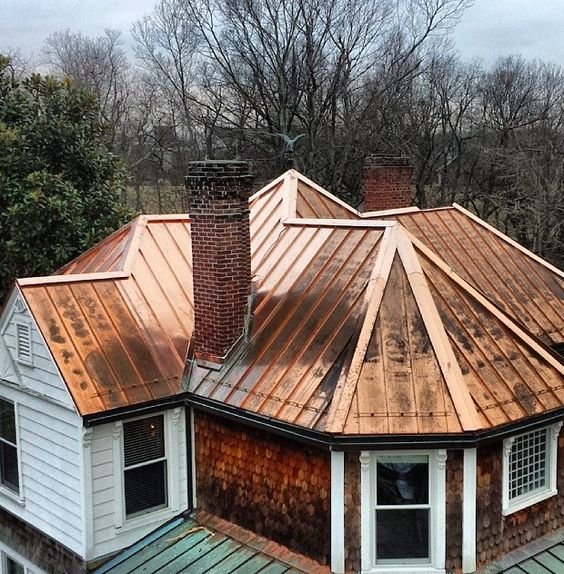
The headline advantage of copper roofing is longevity. A typical copper roof lifespan runs 70 to 100 years, and some installations last longer, which makes copper the closest thing roofing has to a one-and-done solution. For comparison, asphalt shingles are typically expected to last 20 to 25 years, so a home with a copper roof may skip several replacement cycles.
Copper resists corrosion and handles extreme weather, including wind, rain, and temperature swings, better than asphalt shingles or wood shakes. It does not rust the way steel can, which is part of why a well-installed copper roof lifespan stretches so far.
Unlike materials that need cleaning, sealing, or repainting, copper is relatively low maintenance. Once the protective patina forms, it shields the metal from further weathering, so little to no upkeep is required beyond routine inspections of seams and flashing.
A new copper roof starts as a bright, reflective, reddish-brown metal. Over time, natural oxidation develops a copper roof patina, typically blue-green or gray, that acts as a protective layer. The patina is an appearance change only and does not affect how well the roof performs or how long it lasts.
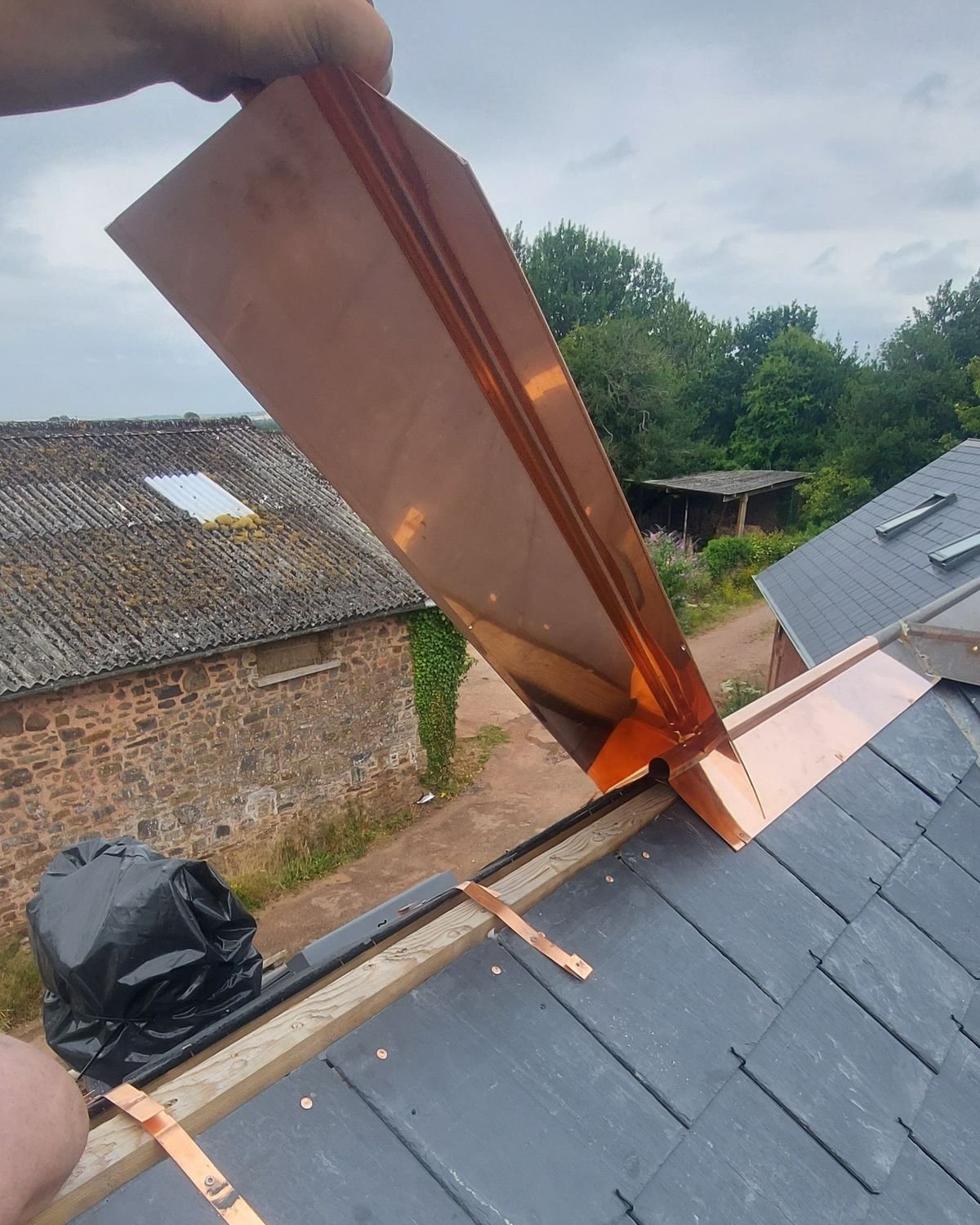
Copper is highly recyclable, and it has very high scrap value compared with other roofing metals. That makes copper roofing one of the more sustainable options when the roof finally does reach the end of its life.
Copper bends easily into shape, so it works well on curved and detailed areas such as bay windows, arches, front porches, and low-slope sections. That flexibility is why copper is often used as an accent even on homes with a different main roof.
The biggest drawback of copper roofing is price. The copper roof cost per square foot is far above almost every other option, and guides put the installed range at roughly $15 to $40 per square foot depending on the style and complexity, compared with about $3 to $6 for typical asphalt shingles. For a standard 2,000 square foot roof, published ranges run from about $30,000 to $80,000, and larger or more complex homes can cost much more.
Copper is typically cut, formed, and soldered by hand, which takes more skilled labor than installing shingles, and it can require special tools. That is a large part of why the copper roof cost per square foot is high, and it is not a good DIY project. Hire an installer with real copper experience, not just general roofing experience.
Many people love the aging process, but not everyone likes the greenish patina that develops. If you want a roof that keeps its original reddish-brown color permanently, copper will not stay that way. Some homeowners choose factory-treated or pre-patinated copper to get a consistent look from day one.
Copper should be installed with compatible metals, because contact with certain other metals, such as aluminum or galvanized steel, can cause galvanic corrosion. Copper runoff can also leave green staining on materials below it, such as siding, masonry, or concrete. Ask the installer how gutters, fasteners, and flashing will be handled so the copper roof lifespan is not cut short by the wrong materials.
Metal roofs shed snow quickly, which can drop it onto entries and walkways, so ask about snow guards. If your home is in a NYC landmark district, check whether exterior changes need approval, and confirm what permits apply. Roof replacement permits in New York City go through the Department of Buildings.
Published pricing varies, and the style you choose changes the number:
Treat the copper roof cost per square foot in any guide as a ballpark, not a quote. Roof size, pitch, complexity, access, local labor rates, and the price of copper at the time all move the final number. A written, itemized estimate for your specific roof is the only reliable figure.
Here is how copper roofing fits different situations:
Copper vs zinc roofing is a common comparison because both are premium architectural metals. Zinc is modestly cheaper, with one guide putting it at about $22 to $32 per square foot installed against $25 to $40 for copper, and zinc offers a similar architectural character with an 80 to 100 year lifespan. Copper generally has the longer track record, with some roofs lasting beyond 100 years.
Painted standing seam steel is the budget alternative, at roughly $12 to $22 per square foot installed against $25 to $40 or more for copper. Steel comes in dozens of factory colors, while copper offers its own unique patina character. When you weigh copper vs zinc roofing against steel, the question is whether you value the natural patina and lifespan enough to pay for it. If you are exploring metal in general, read our guide on whether you can install a metal roof over shingles.
Looked at per year, copper roofing is closer to competitive than the sticker price suggests. One analysis calculates that $30 per square foot over a 100-year life is about $0.30 per square foot per year, compared with roughly $0.24 for architectural shingles replaced several times over the same span. The math only works if you keep the roof for most of its life, and it ignores the value of money you could invest instead.
That is why copper roofing is best treated as a legacy decision rather than a financial one. If you will be in the home for decades, or the roof is part of what makes the house special, the premium can make sense. If you are likely to sell soon, it usually does not.
You do not need a full copper roof to get copper’s benefits. Copper flashing around a chimney, copper accents over a bay window or porch, and copper gutters are far cheaper than a whole roof, and they last much longer than aluminum equivalents. Copper flashing is quoted at roughly $2 to $3 per linear foot, against about $0.75 for aluminum, and it can last 30 to 50 years.
For chimney-specific details, see our guide on how to repair roof leaks around chimney, which compares aluminum and copper flashing.
Before you commit to copper roofing, ask your contractor:
For technical guidance on architectural copper, the Copper Development Association publishes design and installation resources that a good installer will know well.
The Bronx and Westchester see 25 to 35 freeze-thaw cycles each winter plus snow and ice, which makes seam quality, flashing, and snow management especially important on a metal roof. Copper roofing is a specialist job, and we will give you an honest assessment of your roof, structure, and drainage, and tell you plainly whether a specialist should handle the copper itself. For a full look at your current roof first, see our roof inspection service in Westchester.
We hold New York State license WC-38593-H25 and carry full general liability insurance. We serve Riverdale, Mott Haven, Pelham Bay, Fordham, Yonkers, White Plains, Scarsdale, and surrounding areas. Call (929) 257-9396 for a free estimate.
Copper roofing offers a lifespan and a look that no other material matches, and the cost is correspondingly high. If you plan to stay and you love the patina, it is a roof you may never replace. If budget is tight or you may sell soon, painted steel, cool-rated shingles, or copper accents give you much of the character for far less.
Whatever you choose, insist on a written, itemized estimate and an installer with real copper experience. The material is only as good as the person soldering the seams.
Contact The Quick Guys directly:
Phone: (929) 257-9396 — call or text, available 7 days
Email: info@thequickguys.com
Website: thequickguys.com
Service area: Westchester County, the Bronx, Yonkers, White Plains, Scarsdale, and surrounding areas
For pricing on the most common option, see our guide on the average cost to replace roof shingles. Call (929) 257-9396 for a free, written estimate.
Pros of copper roofing include a very long lifespan, durability in harsh weather, low maintenance, a patina that ages attractively, recyclability, and flexibility for detailed shapes. Cons include very high cost, specialist installation, a patina some people dislike, compatibility and staining issues, and snow shedding.
The copper roof cost per square foot is roughly $15 to $40 installed depending on style, with standing seam typically $20 to $40. For a 2,000 square foot roof, published ranges run from about $30,000 to $80,000.
A typical copper roof lifespan is 70 to 100 years, and some installations last longer. That is several times the lifespan of asphalt shingles, which are usually expected to last 20 to 25 years.
Copper roof patina is the blue-green or gray layer that forms as copper naturally oxidizes. It protects the metal from further weathering and is an appearance change only, not a sign of damage.
Copper has the longer track record and some roofs exceed 100 years, while zinc is modestly cheaper and lasts 80 to 100 years. One guide puts zinc at about $22 to $32 per square foot and copper at $25 to $40.
It can be if you plan to stay for decades and want its longevity and look. One cost-per-year analysis puts copper at about $0.30 per square foot per year over 100 years, close to shingles that must be replaced several times. If you may sell soon, the premium usually is not recovered.
Yes. Copper flashing, gutters, and accents over bay windows or porches give you copper’s durability for far less. Copper flashing costs roughly $2 to $3 per linear foot compared with about $0.75 for aluminum and can last 30 to 50 years.