
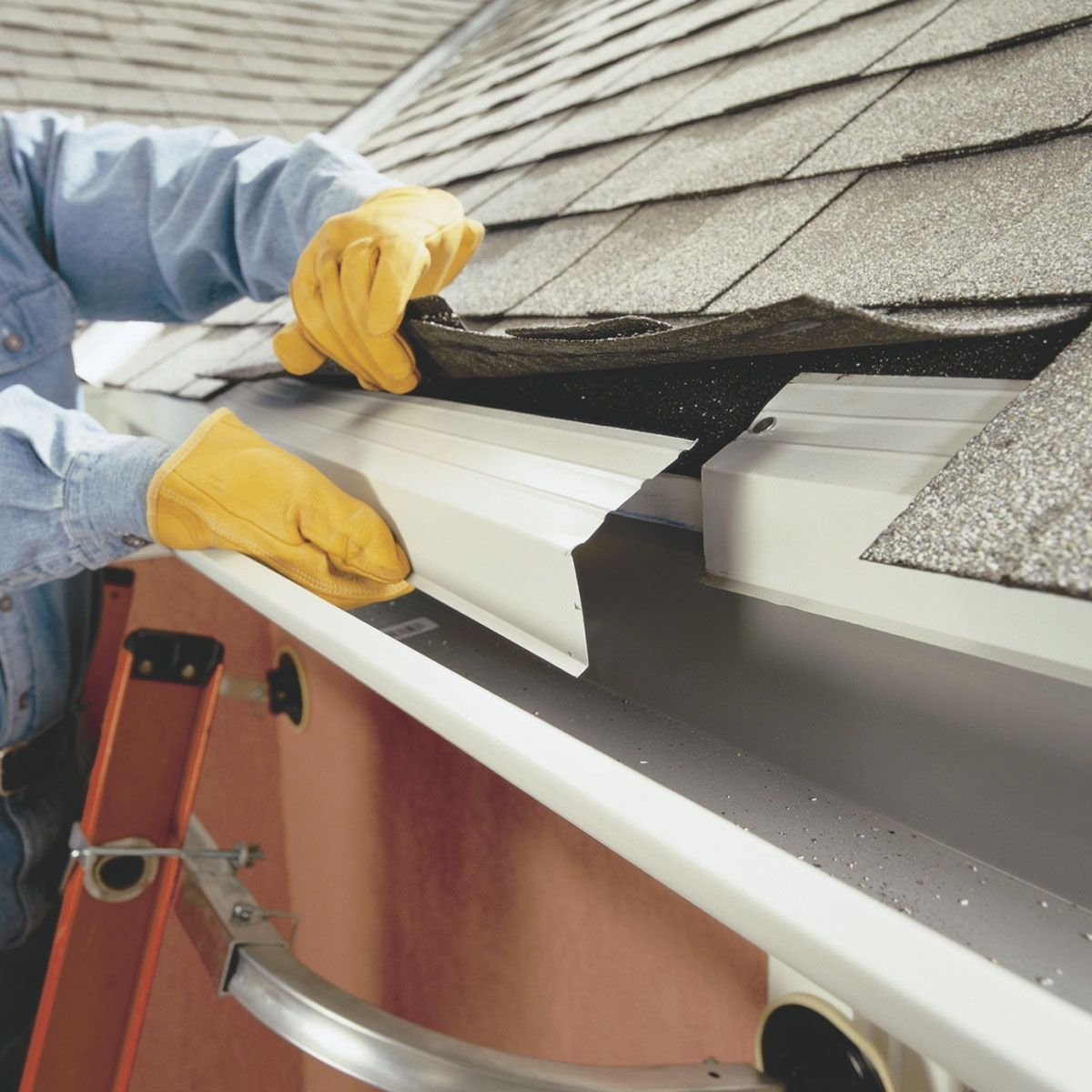
The difference between sectional vs seamless gutters decides whether DIY is realistic. Sectional gutters come in pre-cut 10-foot pieces made of aluminum or vinyl, and you join them with connectors and sealant. That is the kind sold at hardware stores, and it is the kind a careful homeowner can hang. Seamless gutters are formed from a coil of aluminum on site at the exact length of your roofline, which needs a machine and training, so they are installed by professionals.
The tradeoff is that every joint in a sectional system is a possible leak point. One DIY guide notes that constant expansion and contraction can crack the seam caulk of sectional systems after 10 to 15 years. If that worries you, it is a reason to consider a professional seamless install.
Published figures vary between sources, so treat these as ranges:
DIY gutter installation cost is lower mainly because the labor line disappears, which is why guides say DIY saves roughly half. That saving costs you a day or two of ladder work, and it assumes the fascia behind the gutters is sound.
The basic list for a sectional gutter job:
Hangers need to screw into sound fascia. If the board is soft or rotted, repair it first, because gutters hung on rotten wood will pull loose. Also confirm the drip edge is correctly lapped so water goes into the gutter and not behind it.
Hangers need to screw into sound fascia. If the board is soft or rotted, repair it first, because gutters hung on rotten wood will pull loose. Also confirm the drip edge is correctly lapped so water goes into the gutter and not behind it.
Mark a chalk line that drops 1/4 inch for every 10 feet toward each downspout. This line is what makes the gutters drain.
Fasten hangers along the line. Manufacturers commonly recommend a maximum spacing of 24 to 36 inches, and one source suggests closer spacing, around 18 inches, in snowy regions.
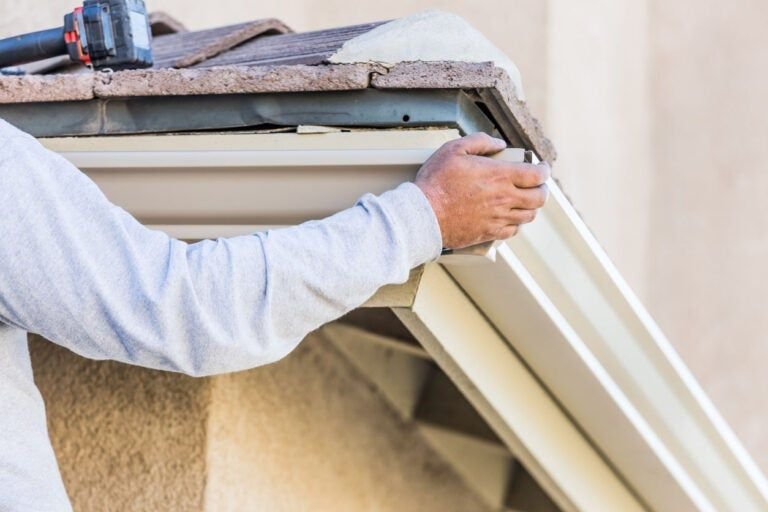
Join sections with connectors and sealant, add end caps and outlets, then lift the assembled run into the hangers. Keep sections short enough to carry up the ladder safely.
Attach downspouts snugly against the wall with bands, and add extensions so water discharges away from the foundation.
Run a hose into the gutters and watch the flow. Water should move toward the downspouts without pooling or leaking at joints. Fix pooling by adjusting the hangers.
Gutter slope and pitch is the detail most DIY jobs get wrong. The standard is a drop of 1/4 inch per 10 feet toward the downspout, which is about 1/16 inch per foot. Too little slope and water stands in the gutter. Too much and it looks wrong and can overshoot at the downspout. Check it with a level, and check it again with water after you hang it.
The riskiest part of installing a gutter yourself is the ladder, not the gutter. Set the ladder on firm, level ground, keep three points of contact, do not lean past the side rails, and never work alone. NIOSH, part of the CDC, publishes ladder safety guidance that is worth reading before you start. If the house is more than one story, or you are uneasy about heights, hire it out.
The mistakes that most often cause DIY gutters to fail:
DIY is a poor fit in these situations:
If you are deciding who to hire, see our guide on finding the best contractor for gutter service in the Bronx. For protection against clogs after installation, read our guide on the best gutter guard systems.
Winter snow and ice add weight to gutters, which is why hanger spacing and fastening matter more here than in a mild climate. Check your fascia in fall and spring, and keep gutters clear. Our DIY roof and gutter inspection guide covers the routine checks, and our gutter repair Bronx page covers common fixes.
The Quick Guys General Construction Inc. is a licensed Home Improvement Contractor in Westchester County, License WC-38593-H25. 1633 Melville Street, Bronx, NY 10460. Call (929) 257-9396.
You can install a rain gutter by yourself if you stick to sectional gutters, check the fascia first, get the slope right, and treat the ladder seriously. For seamless gutters, tall houses, or damaged fascia, a professional install saves trouble. Whichever you choose, test the slope with water before you call the job done.
Contact The Quick Guys directly:
Phone: (929) 257-9396 — call or text, available 7 days
Email: info@thequickguys.com
Website: thequickguys.com
Service area: Westchester County, the Bronx, Yonkers, White Plains, Scarsdale, and surrounding areas
Yes, with sectional aluminum or vinyl gutters from a home center, if the roofline is simple and you are comfortable on a ladder with a helper. Seamless gutters need a professional’s forming machine.
Materials commonly run roughly $1 to $9 per linear foot depending on vinyl or aluminum and the source, so a 150-foot job is often a few hundred to about $1,350 in materials. DIY generally saves roughly half the installed price.
A drop of 1/4 inch per 10 feet toward the downspout, about 1/16 inch per foot.
Sectional gutters come in pre-cut pieces joined with connectors and sealant, which is DIY-friendly but has more seams that can leak. Seamless gutters are formed on site from coil, with fewer leak points, and require a professional.
Manufacturers commonly specify a maximum of 24 to 36 inches, and one source suggests about 18 inches in snow-heavy regions. Follow the instructions for your product.
For seamless gutters, two-story or complex homes, rotted fascia, or if you are not comfortable working at height.