
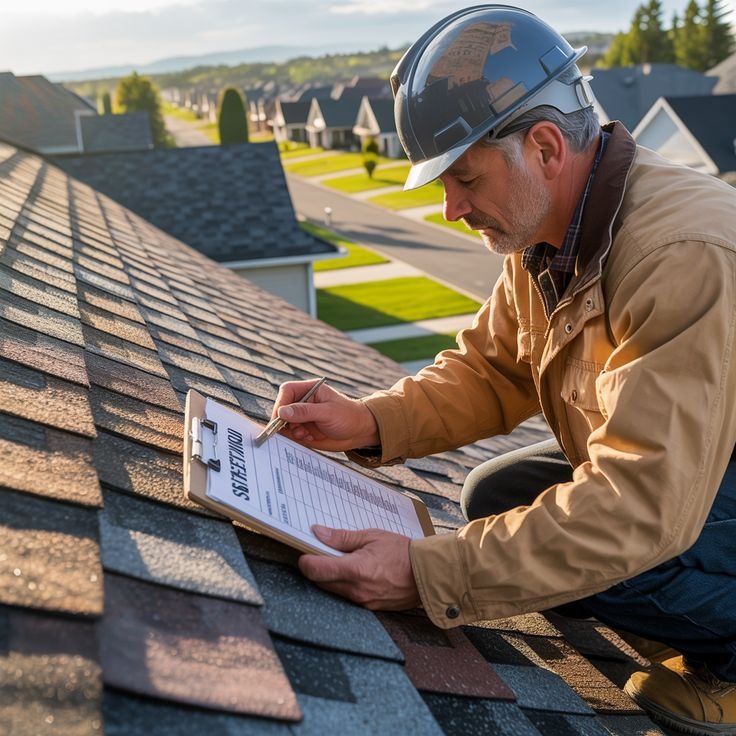
Timing matters as much as the checklist itself. Schedule a DIY roof and gutter inspection at least twice yearly — ideally in spring and fall — with an additional check after any severe weather event like hail, high winds, or heavy storms. Spring inspections reveal winter damage from ice, snow, and freeze-thaw cycles, catching lifted shingles, damaged flashing, and gutter problems before summer storms arrive. Fall inspections prepare your roof for winter by clearing gutter debris and confirming shingles sit flat and secure before the cold sets in.
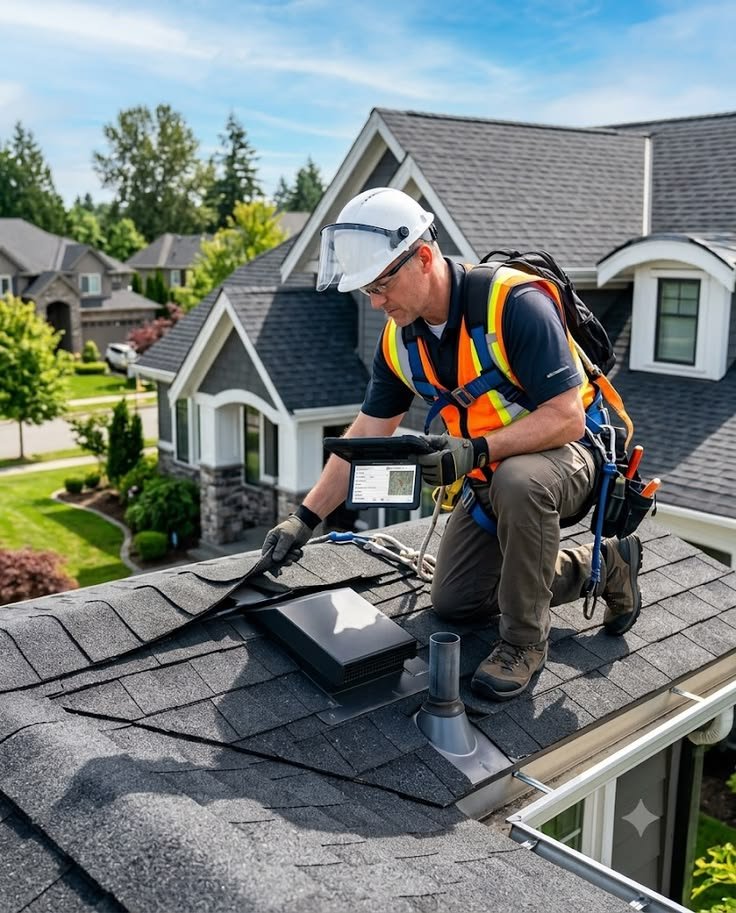
A DIY roof and gutter inspection should never involve walking on a steep, wet, icy, or tile/slate roof — use binoculars from the ground instead for anything beyond a simple, low-slope, single-story roof. If you do use a ladder for closer gutter access, work with a spotter, wear rubber-soled shoes, and never lean past the ladder’s side rails. Professional inspection is always the safer choice for multi-story homes or any roof pitch that makes you uncomfortable
This roof inspection checklist for homeowners begins at ground level, walking the full perimeter of your home before anything else:
This ground-level portion of a roof inspection checklist for homeowners catches the majority of visible warning signs without any fall risk whatsoever.
A thorough gutter inspection checklist covers both the gutters themselves and how they’re performing during actual rainfall:
A gutter inspection checklist matters beyond just the gutters themselves — clogged or damaged gutters force water to back up under shingles at the roof edge, creating leaks that have nothing to do with the roofing material and everything to do with drainage failure.
Every roof penetration — plumbing vents, exhaust pipes, chimneys, skylights, satellite mounts — creates a potential weak spot worth inspecting closely as part of any DIY roof and gutter inspection. Look for cracked rubber boots, loose collars, or missing screws around each penetration. Rubber components expand and contract at a different rate than the surrounding metal or shingles, creating gaps over time, especially after seasonal temperature swings common throughout the Bronx and Westchester.
Inspect the caulk and sealant around vent pipe boots, skylights, and chimney bases specifically. Dried or cracked sealant should be noted for replacement — a $10 to $40 tube of UV-resistant polyurethane sealant applied promptly can prevent thousands of dollars in water damage down the line.
Certain signs of roof damage found during a DIY inspection warrant scheduling a professional visit rather than attempting a fix yourself:
These signs of roof damage typically indicate problems that go beyond what a DIY check can safely diagnose or repair — a trained inspector with proper equipment identifies the full extent and correct solution.
Interior inspection is just as important as the exterior portion of a DIY roof and gutter inspection, since the attic often reveals problems before they ever become visible from inside the living space. Check ceilings and walls throughout the home for new water stains or discoloration. In the attic itself, look for water stains on rafters, wet or compressed insulation, and any musty odors suggesting trapped moisture. Poor attic ventilation shortens roof lifespan significantly, so also confirm soffit and ridge vents appear clear and unobstructed.
Knowing when to call a professional roof inspector rather than continuing a DIY assessment protects both your safety and your roof’s actual condition. According to industry roofing associations, a homeowner’s DIY check is valuable for catching obvious surface issues between professional visits, but many critical problems — deteriorating underlayment, improperly installed flashing, or early structural issues — are simply invisible from the ground or even from a careful walk of the roof surface itself.
When to call a professional roof inspector includes any roof steeper than you’re comfortable walking, any home more than one story, active leaks of any size, a roof approaching or past its 20 to 25 year expected lifespan, and anytime you find something you can’t confidently identify or explain. A professional inspection typically costs $150 to $400 and catches issues a DIY check structurally cannot reach.
The Quick Guys provides professional roof and gutter inspections throughout the Bronx and Westchester County, going beyond what any DIY roof and gutter inspection can safely cover — including full roof-surface access, flashing assessment, and attic evaluation with proper safety equipment. If your DIY check turned up signs of roof damage or gutter problems, see our gutter repair service in the Bronx for pricing on common fixes, or our roof inspection service in Westchester for the full 21-point professional checklist.
We hold New York State license WC-38593-H25 and carry full general liability insurance. We serve Riverdale, Mott Haven, Pelham Bay, Fordham, Yonkers, White Plains, Scarsdale, and surrounding areas. Call (929) 257-9396 for a free estimate.
DIY roof and gutter inspection is one of the highest-value, lowest-cost habits a homeowner can build into their seasonal routine. Twenty minutes with a flashlight and binoculars, done twice a year plus after major storms, catches the majority of developing problems while they’re still inexpensive $10 to $40 fixes rather than thousands of dollars in emergency repairs.
The goal isn’t replacing professional expertise — it’s catching what you reasonably can between professional visits, and knowing precisely when a finding is beyond what you should attempt yourself. That combination of proactive habit and honest self-assessment is what actually protects a roof’s full expected lifespan.
Contact The Quick Guys directly:
Phone: (929) 257-9396 — call or text, available 7 days
Email: info@thequickguys.com
Website: thequickguys.com
Service area: Westchester County, the Bronx, Yonkers, White Plains, Scarsdale, and surrounding areas
For a full professional roof assessment, visit our roof inspection service in Westchester. For gutter-specific repairs, see our gutter repair Bronx page. Call (929) 257-9396 for a free estimate.
Schedule a DIY roof and gutter inspection at least twice yearly — spring and fall — plus an additional check after any severe weather event like hail, high winds, or heavy storms.
Check rooflines for sagging from the ground, look for missing or curling shingles, note granule loss in gutters, inspect areas near chimneys and skylights, and check for algae or moss growth — all done safely from ground level.
Clear debris blocking water flow, confirm gutters attach securely without sagging, check for rust or separation at seams, verify downspouts direct water away from the foundation, and inspect fascia and soffits for rot.
Sagging rooflines, active leaks, granule loss across large sections, a roof older than 15 years without recent inspection, multiple damaged shingles, or visible daylight through the roof deck from inside the attic.
No — use binoculars from the ground instead. Never walk a roof that’s steep, wet, icy, or covered in tile or slate. Professional inspection is always the safer choice for multi-story homes.
Call a professional for any roof steeper than you’re comfortable walking, homes more than one story, active leaks, roofs nearing 20-25 years old, or any finding you can’t confidently identify.
The attic often shows problems before they’re visible inside the home — water stains on rafters, wet insulation, musty odors indicating trapped moisture, and whether soffit and ridge ventilation appears clear and functioning.